
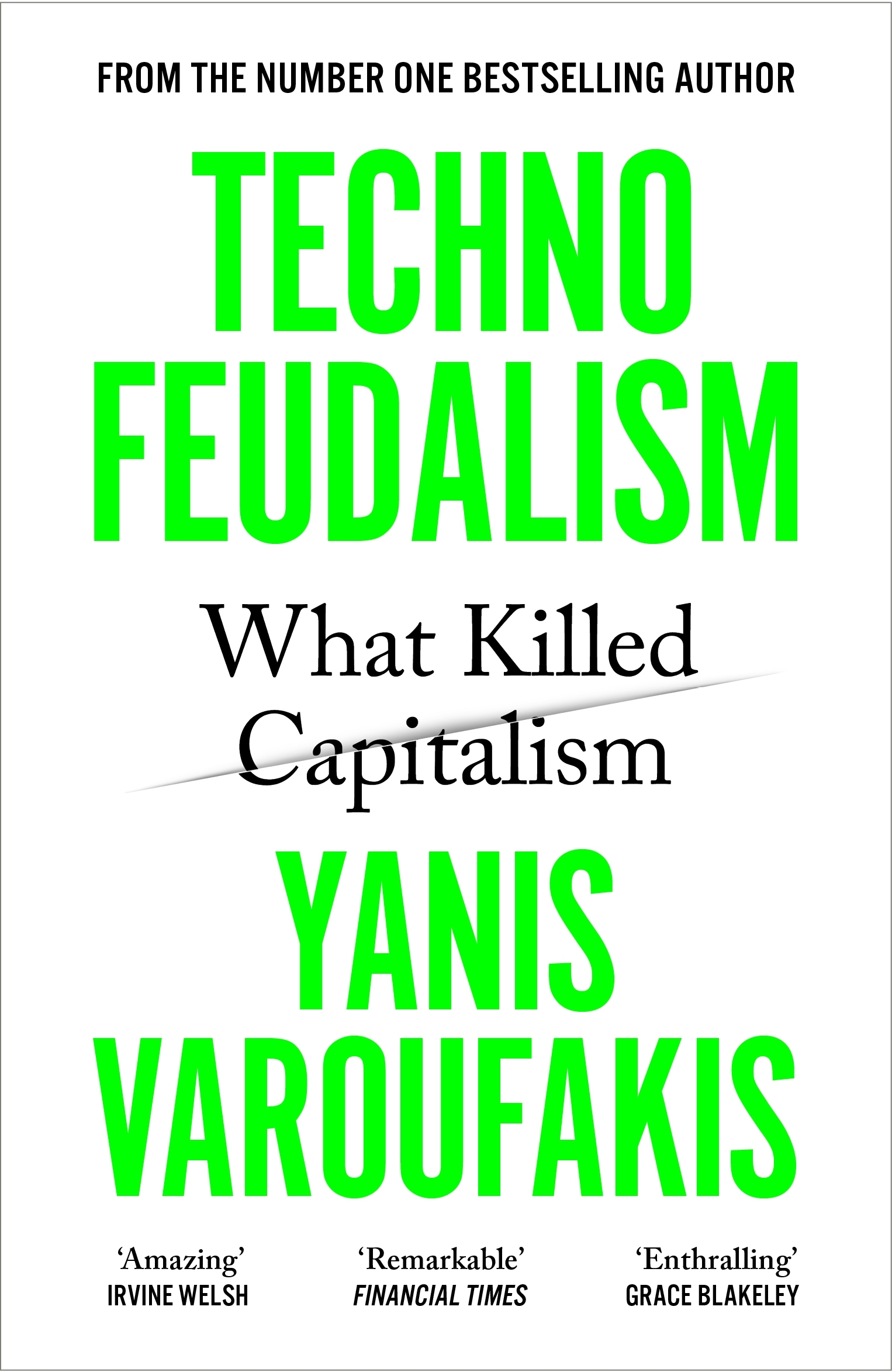
In Technofeudalism, Yanis Varoufakis maps the dangers of the platform economy with forbidding clarity, but his obituary for capitalism reads more like desire than diagnosis.
Yanis Varoufakis has never written like an economist. In Technofeudalism, he addresses his late father in a series of reflections on technology, power, and the fate of capitalism. The device softens the polemic and humanizes the argument, but it also reveals the book’s central tension: Varoufakis wants very much to believe that capitalism has already ended, and he occasionally treats that desire as proof.
His thesis is compelling: capitalism has not merely decayed; it has mutated into something worse. Digital platforms, he argues, have replaced markets with private command economies. Data, not labor, has become the primary source of wealth. And because the owners of these platforms extract value the way feudal lords once extracted rents, he names the system “technofeudalism.”
The metaphor is arresting. The conclusions are less so.
Varoufakis is at his strongest when he maps how platforms reshape economic life. His descriptions of Amazon’s closed ecosystem, Apple’s walled garden, or Google’s algorithmic gatekeeping are precise and persuasive. He rightly warns that competition is collapsing, inequality is climbing, and labor is becoming more precarious. The book’s clarity on these points is invaluable. It’s impossible to deny that capitalism is malfunctioning in deep, structural ways.
But Varoufakis is less convincing when he insists that capitalism has already died. His argument often relies on sweeping inevitabilities, historical arcs that descend cleanly toward collapse. It’s a tone reminiscent of the more deterministic passages of Marx, whom Varoufakis channels throughout the book: capital concentrates, inequality rises, the system destabilizes. This framing makes for compelling drama, but history rarely obeys such choreography.
Capitalism’s defining feature has never been stability. It survives by mutating; financializing, globalizing, digitizing. The platform economy may be corrosive, but it is still capitalist in its incentives: firms compete, capital flows, consumers choose, innovation disrupts incumbents. TikTok unseated Meta; Shein unsettled Amazon; political regulators are reasserting themselves. These are not feudal dynamics.
Nor is technofeudalism inevitable. Varoufakis often treats the current trajectory as fait accompli, but the digital realm remains highly regulable. Interoperability mandates, antitrust action, data-rights guarantees, platform taxation—none of these are unrealistic. They have, in some places, already begun. Feudalism implies stasis. Digital capitalism, for better or worse, remains volatile.
To dismiss the possibility of reform is to overlook the most enduring fact of the last two centuries: capitalism has outlived every forecast of its demise. Not because it is just, but because it bends rather than breaks. Varoufakis is right to diagnose the illness; he is less persuasive in predicting the funeral.
That tension—between sharp diagnosis and sweeping prognosis—feels rooted in Varoufakis’s own political history. His tenure as Greece’s finance minister during the 2015 debt crisis is, probably, the unspoken engine of this book. His mathematical analysis of Greece’s position was, by most accounts, correct: the debt was unpayable; austerity was self-defeating; the Eurozone’s architecture was flawed. But politically he was isolated, outmaneuvered, and ultimately overruled.
The experience left him convinced that established institutions cannot reform themselves. In Technofeudalism, this conclusion is extended globally. But political failure does not always signal systemic inevitability. The leap from “the Eurogroup is rigid” to “capitalism is finished” is enormous, and Varoufakis treats it as a natural step. His proposed alternatives, a postcapitalist model explored further in his earlier book Another Now, remain speculative sketches. They may someday become blueprints, but they are not yet viable architectures.
What feels missing, then, is the space between collapse and complacency. One need not defend capitalism to believe it can be repaired. Regulation has reshaped it before. Social norms have constrained its excesses. Democratic institutions have checked private power—imperfectly, inconsistently, but not insignificantly. The world has not exhausted its options.
This does not mean Varoufakis’s warnings should be dismissed. On the contrary: his critique of platform power is urgent. His insistence that data extraction constitutes a new form of exploitation is persuasive. He is right to remind us that markets are no longer the default controllers of economic life, and that private algorithms increasingly govern public experience.
But these insights support a call for regulation, not a declaration of capitalism’s death. The book’s central metaphor—feudalism—illuminates certain dynamics while obscuring others. Workers today can leave platforms; consumers retain partial agency; states can intervene; technological disruption continues. Again, none of these were true under feudal rule.
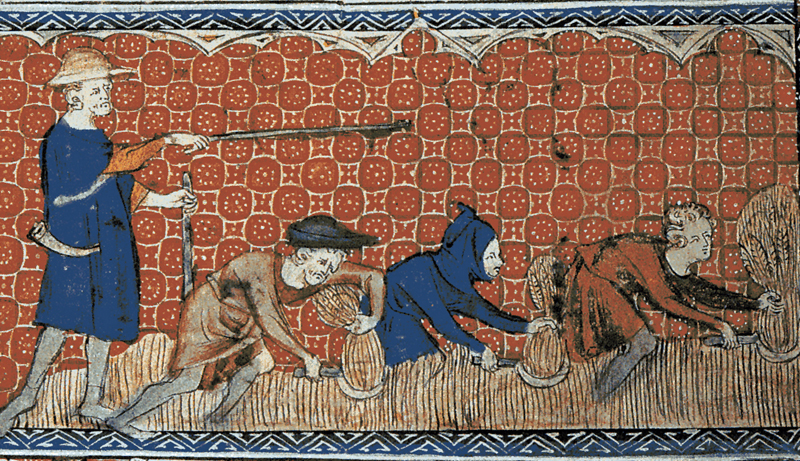
There is also the matter of global context. Varoufakis describes a system that resembles the U.S. and parts of Europe, but the rest of the world is improvising in far more varied ways. India’s state-built digital infrastructure, China’s state-capitalist tech governance, Southeast Asia’s hybrid platform economies—none fit neatly into his schema. The global South is not merely being dragged into technofeudalism; it is actively shaping, resisting, and reconfiguring the digital landscape. For a book so intent on declaring a new epoch, the omission is puzzling.
Still, Technofeudalism succeeds as a provocation. It demands that readers reconsider the power structures governing everyday life. It asks whether capitalism can survive its own digital offspring. And it argues (earnestly, beautifully) that economic critique is also a moral act, something passed from one generation to the next.
Perhaps that is how the book is best read: not as prophecy, but as an intergenerational exchange. Just like Varoufakis writing to his father as if reporting from a world transformed beyond recognition. The gesture is moving, even if the conclusions are overstated.
This book is an argument worth having. It reminds us that capitalism’s flaws are real, dangerous, and urgently in need of correction. But its death has been declared many times before. We would do well to take the warning seriously, without mistaking it for destiny.