
Knowledge is power. But knowing, I’ve learned, is not the same as knowledge.
When I was a child, I was told to read the newspaper every day. I hated it. The headlines had nothing to do with me or my own little world, and when I wandered into the economic section—all fancy graphs and jargon—I would ask my mother to explain. She never did. “It’s too complicated for you,” she’d say without even glancing at the page.
Still, the habit persisted, albeit on and off, all the way into my first job as a copywriter, when reading newspapers was practically part of the contract (I was in charge of the Thursday advertorial). Habit, after all, is a loyal teacher.
Eventually, newspapers gave way to magazines, tabloids, and then—to my greatest joy—indie zines. Growing up, I read everything: crumpled Koran Lampu Merah the chauffeur left in the car; Apartamento, an interiors magazine that’s really just strangers’ homes beautifully captured with grainy analog film; Eggs, a tiny New York publication devoted to the beautiful chaos of cooking. Somewhere along the way, I absorbed a belief many of us inherit without questioning: that being “on top of everything” is both necessary and virtuous. To be informed was to be armed. To know as much as possible was to gain leverage.
But leverage for what? I’m not sure I ever asked myself.
About a year ago, I came to a realization. I felt an urge—not to know more, but to let the news pass by. It made me feel guilty at first. Even lazy. But the more I thought about it, the more obvious it seemed: we no longer live in a world where being a walking encyclopedia is useful. Information is no longer scarce; it is smothering. Where you direct your attention is, arguably, the real power now.
The internet—and increasingly, artificial intelligence—has flooded us with information that is abundant but dishonest: engineered for clicks, laced with bias, shaped by invisible incentives. Its goal is no longer just to inform but also to capture. Information overload often masquerade itself as productivity, but it leaves us overwhelmed rather than wiser. There is a difference between knowing and being informed. And there is a difference between being informed and being influenced.
The old mantra “knowledge is power” made sense when information was hard to obtain. But in the age of infinite information, power lies in knowing what not to know. Selective ignorance is the new intellect: choosing what deserves your mental bandwidth and letting the rest drift away. Every headline, every notification, every little “must-read” steals a fraction of the stillness that deep thought requires.
This year, I stretched myself to exhaustion. After our annual Karya Raya festival, I found a little space of time to pause. I limited Instagram to fifteen minutes a day. I delegated meetings. I gave myself long stretches of solitude, allowing my subconscious to rearrange my thoughts and feelings like how nature often repairs itself when left alone.
Silence, I’ve realized, is not the absence of sound. It is the space that allows you to hear your inner voice.
Lao Tzu wrote:
“We shape clay into a pot, but it is the emptiness inside that makes it useful.
We build a house from wood, but it is the inner space that makes it livable.
Thus, the value of what is, is in what is not.”
Emptiness, in other words, is not a void. It is a vessel.
Notice this after any intense period of work: the mind isn’t just tired. It’s restless. Your attention span shrinks. The constant responding, managing, and problem-solving rewires the brain for urgency instead of substance. How do you fix that?
For me, is to pull back from the noise: the scrolling, the notifications, even Netflix and new books. To simply attend to my own mind. I’m sorry for my slow replies lately—but as I told my son when he asked why I listen to “boring piano music with no words,”
“My mind is already noisy. If the music is noisy too, I can’t hear mine.”
So I took long, aimless trips across Jakarta by KRL and MRT, notebook in hand. Writers don’t chase ideas; we make space for ideas to come. I watched a disabled passenger stand in the cramped KRL while a man shouted for nearly a full minute before someone younger gave up their seat. I talked to a Gojek driver who wished “bad luck” for himself—an accident, perhaps—so he might go viral and earn easy money. “Budaya Indonesia itu kasian,” he said, as if pity itself had become a kind of political currency. His comment revealed something unsettling about our attention economy: that being seen, even for the wrong reasons, is now desirable, and considered a form of fortune.
Later that day, I drank coffee in an empty café at a busy intersection—the only customer all afternoon—while the city rushed around me. In that moment, I felt the opposite kind of bliss: of being unseen. And in that small pocket of solitude it struck me how invisible we can be even in the middle of a crowd. And then the larger truth: that all of us—tiny, ephemeral figures on a floating rock—are suspended in the same cosmic anonymity.
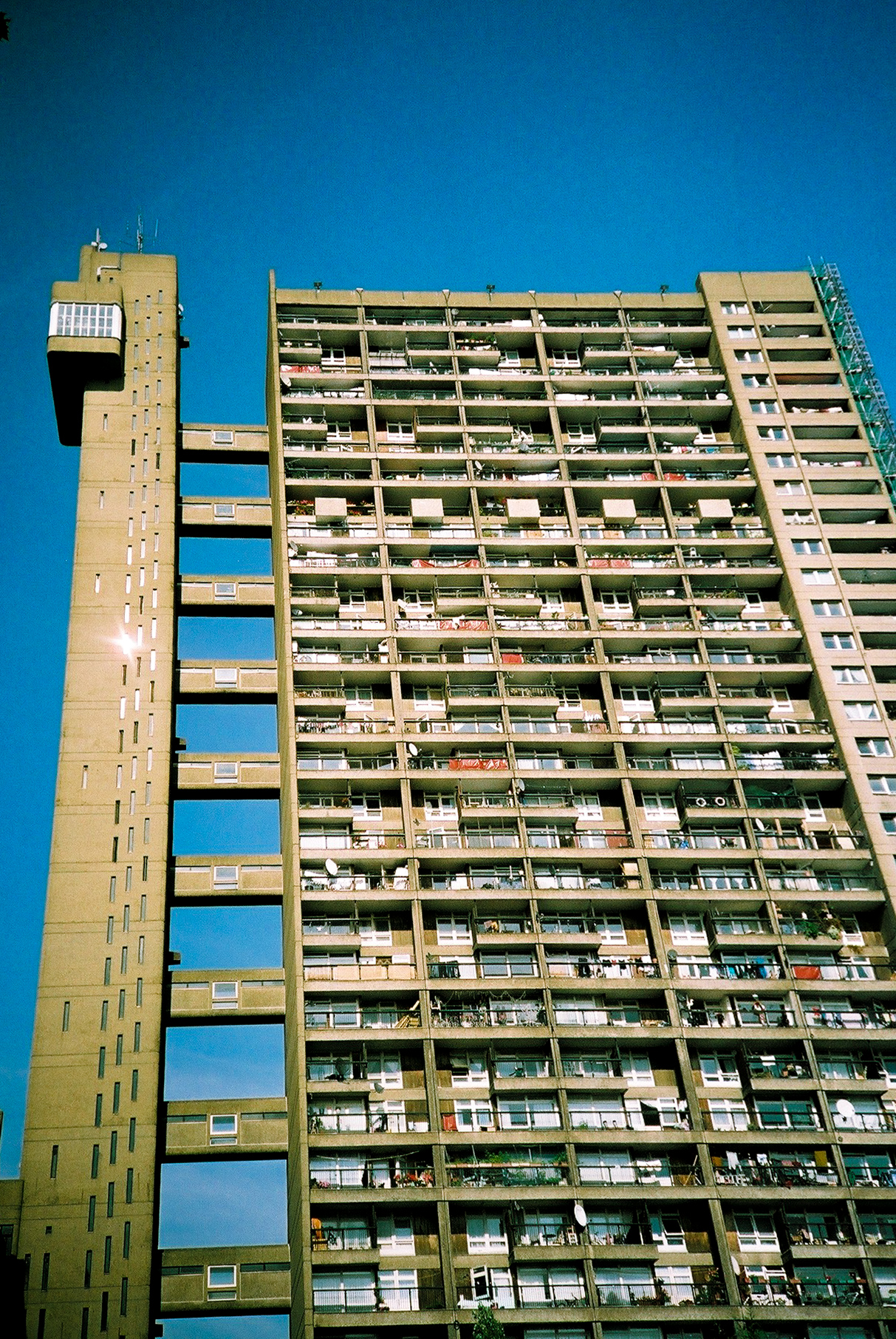
These excursions paired with intense wanderings weren’t something new. Back in my advertising days in London, my art director, Sherry, and I used to walk from Piccadilly Circus to Kensal Green solving creative briefs on foot. Once we ended up in front of Trellick Tower—the “Goldfinger building”—in all its brutalist glory. I can’t remember the exact idea we came up with, something involving butter, gold, and a pun-powered tagline: “slick as Bond,” but I remember the feeling: thinking clears up when the body is in motion.
What I later learned is that I had been practicing what Cal Newport calls “productive meditation”, thinking deeply while doing something physically simple. In that quiet, I prepare for something rarer than information: focus.
Newport defines deep work as “the ability to focus without distraction on a cognitively demanding task.” It is becoming scarce and therefore valuable. “The new form of craftsmanship.” Most of us live in shallow work: reacting, scrolling, typing, posting, replying—producing little that is really useful or endures. Deep work, by contrast, is a decision about what deserves your precious attention.
“A deep life,” Newport writes, “is a good life.” Attention is what life is made of. Scatter your attention, and your life scatters with it.
During these long walks and lone hours, I began thinking about my presence online. Especially Instagram. I never intended to “build” anything there. It was a happy accident. For almost ten years, my followers hovered around 700. Then things changed because of a single post. I haven’t really think my contribution online then, but now I have.
Here’s what I realized:
I’m NOT a content creator; I am first and always a writer. I want to return to the form I love most: long-form essays, reflections, short stories. I used to write anonymously on Tumblr and somehow gathered a small constellation of distant friends from it. I miss that. So I’m bringing it back through my personal blog and Medium. Instagram and TikTok will get the simpler versions.
I’ll keep doing video book reviews, but without ratings or the “like/don’t like” shortcuts. Ratings please the algorithm, sure, but that’s never been my goal. I’m not trying to gather followers; I’m trying to reach the “right” readers. I want to talk about ideas, themes, craft—especially now that I’m selectively accepting review requests from international publishers.
For years I held back from posting too much because I didn’t want to add more junk to the internet. But someone once told me: one person’s junk is another person’s treasure. Well… then the best I can do is show up with a bit of thoughtfulness and integrity.
It feels like I’ve reached a kind of turning point. When I was a child, I believed I needed to know everything on the page. Now I’m learning the opposite. That not knowing is what gives my mind room to think and reflect. And honestly, I’m still not entirely sure why people follow this account. But maybe that’s the point. Not knowing leaves space for the good kind of uncertainty. The kind that allows something good to grow.
Anyway, I’m grateful you’re here.